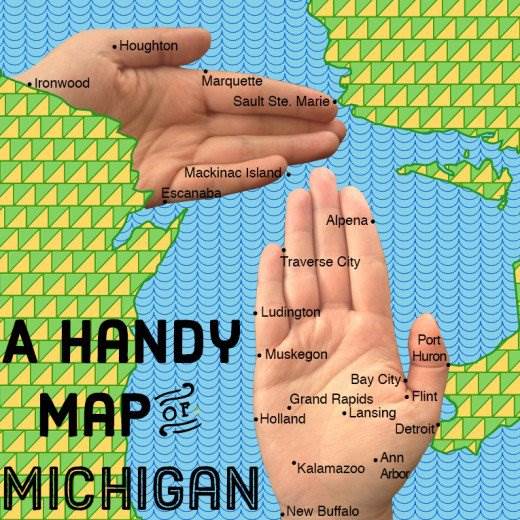
Every Michigander has done this at least a hundred times. Someone asks where you’re from, and instinctively, you hold up your right hand, point to a spot, and say “right here.” It’s universal. It doesn’t matter if you’re in Michigan or across the country. The hand comes out, and suddenly everyone understands.
This image maps out major Michigan cities on the hand, and it’s surprisingly accurate. Detroit is down at the base of the thumb. Lansing is in the middle of the palm. Traverse City is on the pinky. Sault Ste. Marie is at the tip of the index finger. Mackinac Island is right there on the side of the middle finger. It works.
The Upper Peninsula gets its own hand, which makes sense because it’s a separate landmass. The UP is the left hand, and you can point to Marquette, Houghton, Ironwood, and Escanaba just as easily. Two-handed Michigan geography. It’s efficient.
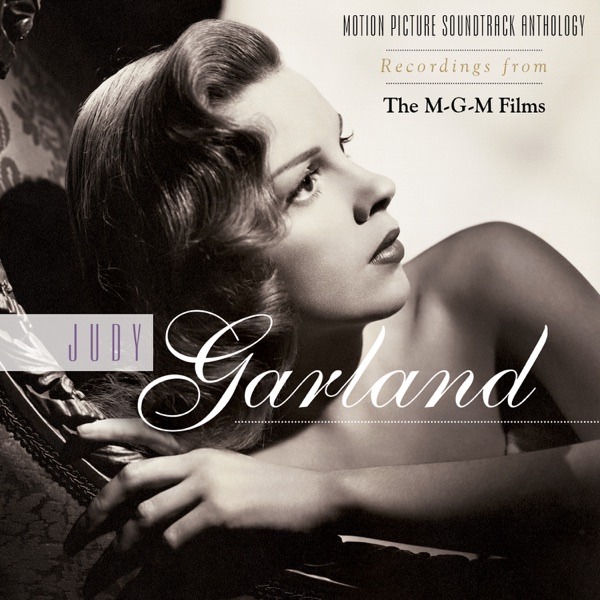
How about a sing-a-long?
Judy Garland Sings “I Want To Go Back To Michigan”
We had a dinner recently to celebrate my birthday at a local restaurant whose cuisine was advertised as being “vegan sushi”. Now you might ask “how is this possible”? How can a Dragon or California roll be considered “vegan”?
Well, the short answer is to substitute vegetables for fish, and prepare dishes sushi style, like a cucumber and avocado roll with kimchi; or shitaki nigiri; or unagi nigiri made instead with eggplant; or teriyaki tofu nigiri. Needless to say we had great fun exploring the menu including a spicey nigiri style entree made with sliced beets over rice that came with a caveat for the diners: one of the items on the plate would have an extra dose of ghost-pepper added to its sauce. A common practice according to the waiter was to allow the plate to be passed around without indicating to the diners which sushi was the ghosted one so whomever turned out to be the lucky diner would subsequently need to down a shot of sake as an “antidote” for their scorched esophagus. It was decided to mark the affected piece of sushi with red-colored piping (which might actually contain the more pungent dose of pepper sauce) and whomever was the most adventurous of us four could opt to have a go at it. Well that left me out. Despite spending a wonderful time celebrating my special day with family injesting the tasty cuisine at the sushi parlor, ghost pepper and spirits are not my cuppa. You laugh but have you ever tried to scarf down a super-spicy *amuse buche*? First your throat, then your intestines catch on fire, next your eyes start to water, and then the sweats begin. Break out the fire extinguisher.
Besides the thought of it kinda reminded me of a scene from a BBC whodunit or an old radio mystery show like Suspense! during which a protagonist with a napkin neatly tucked into the collar of his shirt is sharing a meal while making jokes and laughing with others at a dinner table then suddenly has a seizure, collapses and does a faceplant into his soup.
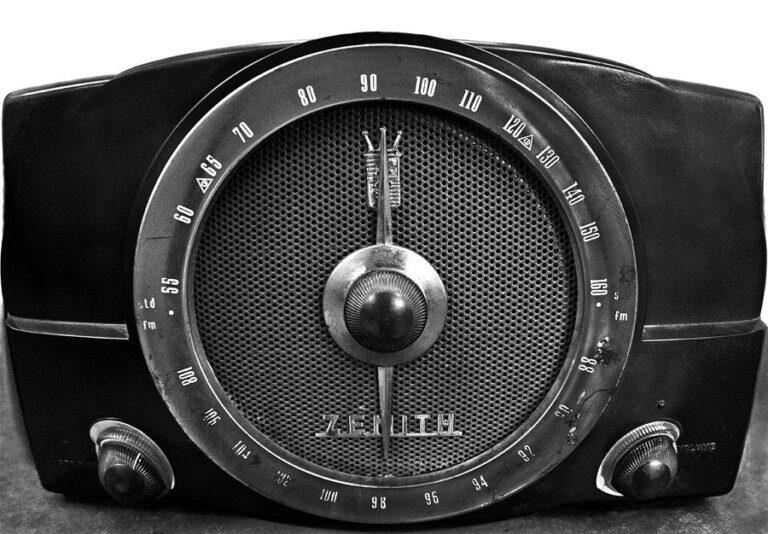
But then I’m just an O.G. whose history with the mass media goes back decades listening to classic radio shows that emanated from a small box with a clock and frequency/volume dials on its face strategically located on my night stand next to my bed. The Lux Radio Theater and The Screen Guild Theater would broadcast adaptations of Hollywood movies, performed before a live audience, complete with cast members from the original films. Suspense, Escape, The Mysterious Traveler and Inner Sanctum Mysteries were a few of the popular thriller anthology series one could easily become addicted to. My favorites shows as a whippersnapper included “Melody Ranch” featuring the singing cowboy Gene Autry yodeling his rendition of “Back in the Saddle Again” ; “The Lone Ranger” – a show that originated from a station with the “call sign” WXYZ located in our hometown of Detroit; and “The Shadow” whose opening lines were:
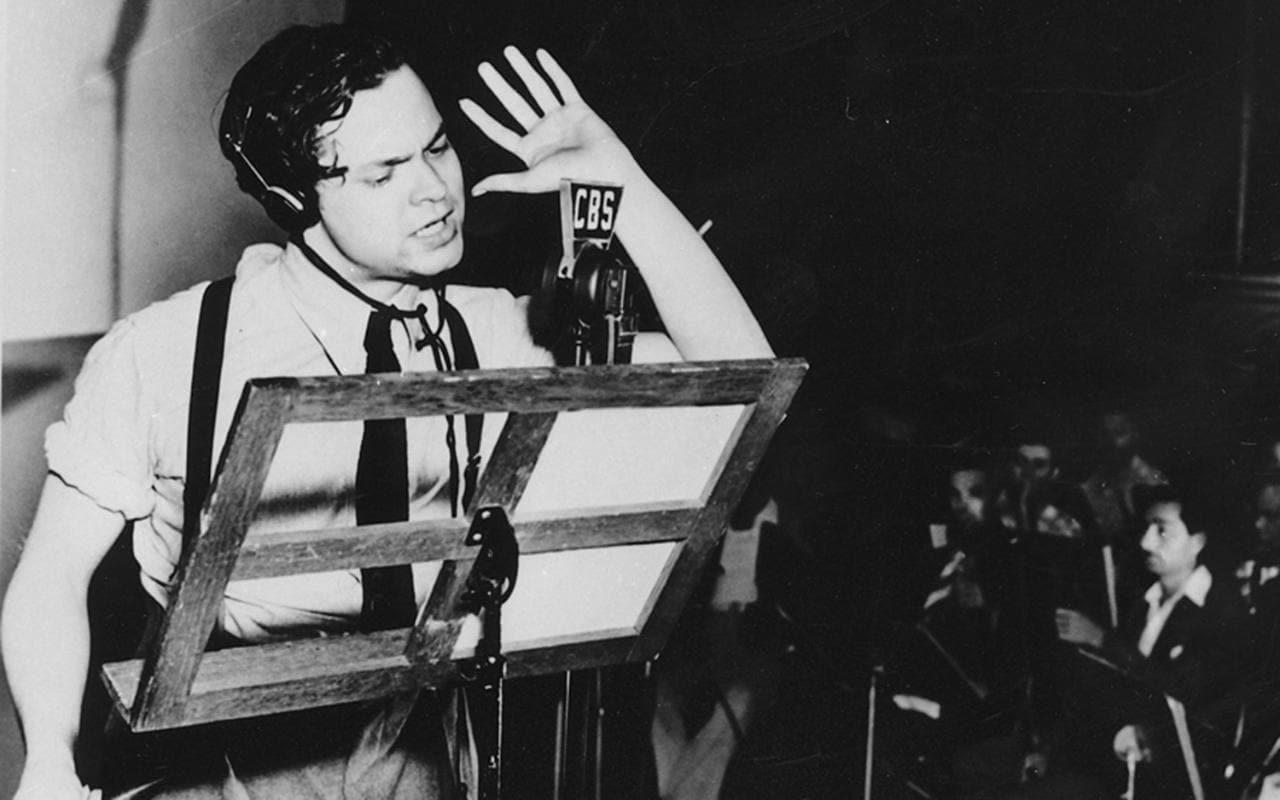
Orson Welles Mercury Theater On The Air
Of course the most famous – or we might say the most infamous show of all time would have to be the version broadcast on October 30, 1938 by the CBS Radio Network of the H.G. Wells classic “The War of The Worlds” via The Mercury Radio Theatre On The Air featuring Orson Welles – a little before my time – and one I would not actually hear in person for another 30 odd years after the original broadcast. More on that a bit later.
So what are these “call signs” anyway? They’re sort of acronyms of 3 to 4 letters in length – used to designate commercial radio and TV transmitter stations for a given country. In the U.S. those East of the Mississippi began with a ‘W’ and those located West of the river started with a “K” – with a few grandfathered exceptions. So, for instance the first radio news program was broadcast on August 31, 1920, via the station 8MK – call sign WWJ – in Detroit. Owned by a local newspaper The Detroit News, the station covered the local election results. Later these station call signs would be appended by either the two character call signs “AM” [amplitude modulation] or “FM” [frequency modulation] which designates how a station’s carrier wave was tuned for broadcast.
The marketing environment and content for audio media back in the days of the Golden Age Of Radio was completely owned, controlled and broadcast by essentially 4 Networks – National Broadcasting Company [NBC] – [originally NBC Red], American Broadcasting Company [ABC] – [originally NBC Blue], Columbia Broadcasting System [CBS], and Mutual Broadcasting System [MBS]. Plus radio during that era presented easy inexpensive access to media that by design was scheduled to air at a specific time, so listeners would tune-in to a favorite program as a part of their daily routine, and thereby become effectively conditioned to plan their day around the dial – a media marketer’s dream come true.
THE BREAKFAST CLUB.
My first “live” encounter with mass media radio was when I was 8. Dad had a friend whose surname was Marko whom he’d either had for awhile or met while in the Navy (my assumption) who lived in Chicago with his family. For the July 4th holiday that Summer, Dad decided to gather up Mom, baby P.J., sister Anita, and myself and make our way either by train or car the 300 miles to The Windy City to visit the Markos.
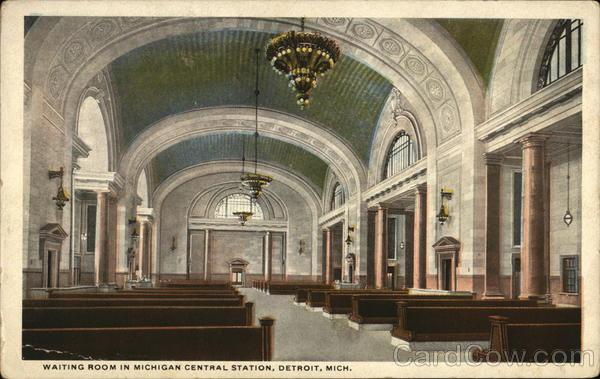
Michigan Terminal Interior
[I do believe it was by rail as I dimly recall wandering through the massive 14 story Michigan Central Station located in the Corktown district of Detroit with its amazing Beau Arts style interior to board a train at some point in my early years.
But I could be mistaken plus I like to tell strories, so who knows?]
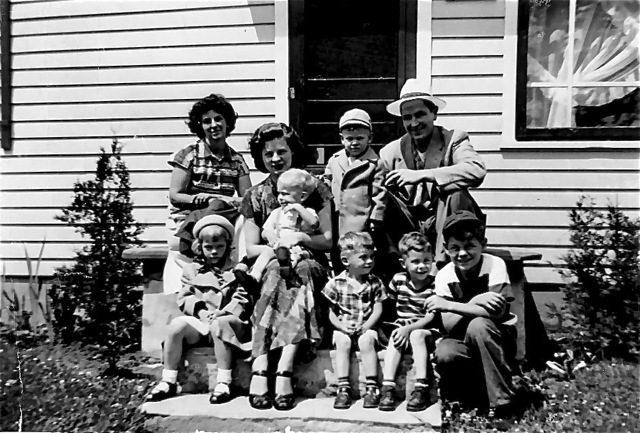
Be that as it may, we made our way to Chi-Town and on or near the Fourth, and posed for photos on the steps to the Marko’s house.
The Markos and The Babijs ca. 1950
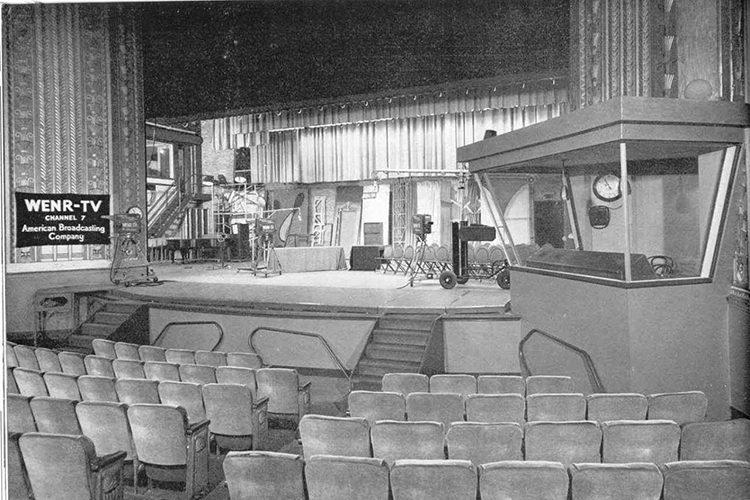
Later that week we all went downtown to the ABC Civic Studios to see the morning WENR radio/TV simulcast of Don McNeill’s The Breakfast Club. Once inside we were directed to our seats near the center of the theater. As we were just getting acclimated to the sights and sounds in the theater, one of the show’s producers came up to Dad and started talking with him. After a few moments, Dad turned to us and said : “They want us to get up on stage. I guess we’re the largest family in the audience today!” So off we went – all five of us.
Then the show began with its classic opening theme song – recited – not sung – by host Don McNeill:
WENR Studios
Once backstage we stood and watched transfixed as the broadcast proceeded. I was particularly taken both by the activity of the crew and cast members, scurrying around to their stage positions on cue, as well as the colors and intensity of the lighting – a fascination I would put to good use decades in the future as a member of the swing gangs at Fox Studios and careening around the streets of L.A. at night in a grip truck loaded with camera gear and lighting equipment we’d deploy to illuminate on-location scenes for the “no budget” feature films we shot. To do this we’d clamp onto public power receptacles using a power converter designed by none other than Alex Funke – then teaching at UCLA film school – who would one day share Oscars for special effects for his work on The Lord of the Rings Trilogy. In those days, it seemed everyone trying to “make it” in LaLa Land were actually making a living waiting tables, tending bar, teaching, or on the dole. Nowadays they’re probably doing all of the above as well as driving for Uber or Door Dash.
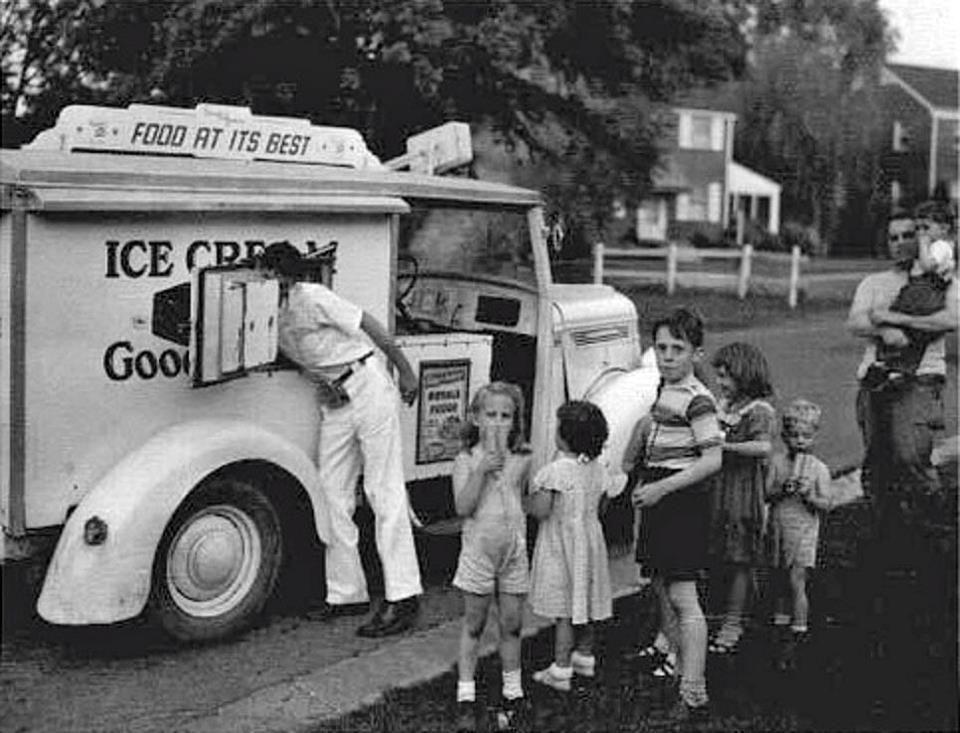
The Good Humor Man
Anyway, Mom and Dad were eventually ushered before the host Don McNeill for an interview and my guess is that they were coaxed into singing one of their duets like “Apple Blossom Time” – but I don’t remember for sure I was so overwhelmed by stage fright. However I am sure that at a prompt by host Don McNeill, a stage hand led me up to a microphone and I was coaxed into singing “Old MacDonald had a farm…”. All I could do was focus on the mike – for sure bigger than any Good Humor creamsicle – that was literally jammed into my face – and somehow manage to stumble through a couple of verses of the classic nursery rhyme before cutting my solo short after:
“duck duck here, duck duck there, here a duck, there a duck, everywhere a duck duck, Old MacDonald had a farm ee-eye, ee-eye-oh”…
…then pause to glance back up to Ma and Dad with a sheepish grin. They laughed and the audience seemed to get a kick out of it too.
After that, Ma was gifted a new Lewyt vacuum cleaner and for my warbling I was awarded a tennis racket which over the years I used seemingly for everything else but tennis since I was no aspiring Hall of Fame tennis star like – wait for it — Don McNeill. 🙂 Yes…an equally famous namesake of our illustrious radio host. One might even wonder whether that tennis racket freebie was by inference a part of the script?
My attraction to the mass media would grow in the succeeding years – both radio and especially the “new” medium of television viewed via a 12 inch screen in black and white – which exposed us to programs like the Howdy Doody Show which featured host “Buffalo Bob” Smith – a name derived from a blending of “Buffalo Bill” and Bob Smith’s birthplace of Buffalo, NY – and a puppet named Howdy Doody – as in the idiom “howdy-do”. One expression from this show that in itself has become timeless is the reaction Buffalo Bob would sound when greeting the character Chief Thunderthud: “Cowabunga!”
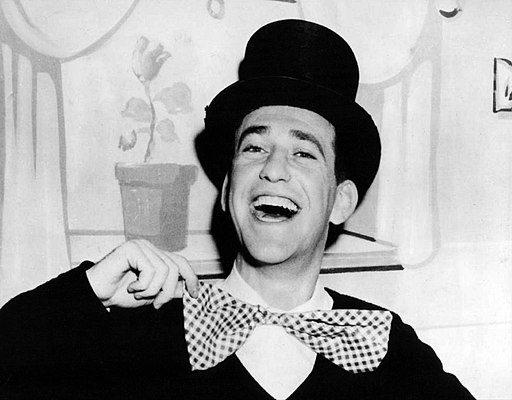
Soupy Sales
And who could forget the legendary children’s lunch show “12 O’Clock Comics” [AKA “Lunch With Soupy Sales”] broadcast live from WXYZ-TV in Detroit featuring the completely improvised zany antics of Soupy Sales together with the hand-held puppet characters of White Fang and Black Tooth.
You have to check him out, although sadly the episodes from the original series that aired in Detroit were not saved. However, Brother John has managed to find a rare, completely improvised, studio-only camera clip of Soupy’s “Lunch With Soupy” show featuring a surprise visit by a stripper – completely unbeknownst to Soupy. Of course we cannot show it here but we do have a link to a YouTube interview of Soupy during which he talks about it.
DUTY CALLS.
Call signs were deployed not only for commercial stations in the US and around the world. The military used station call signs for braodcast communications as well as ship-to-shore communications. Every command, unit and division, each ship and plane, and military instillation had a call sign. The United States Army uses fixed station call signs which begin with W, such as WAR, used by U.S. Army Headquarters. The Navy uses call signs beginning with “N” and the Air Force uses “A”.
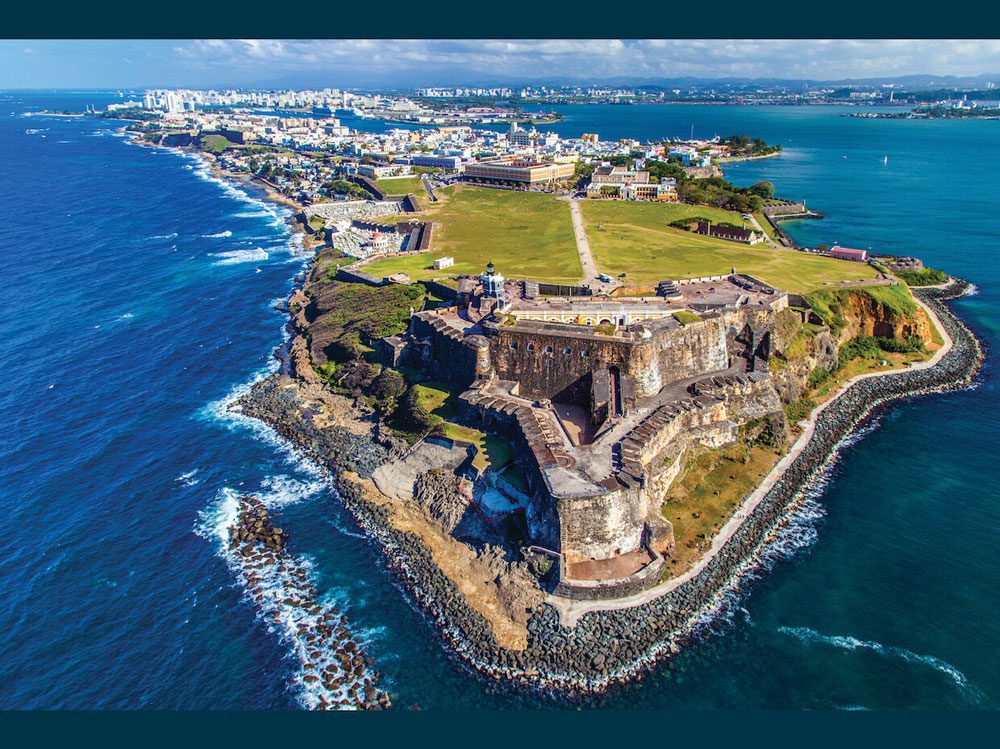
La Fortaleza – San Juan P.R.
My initial duty station in the Navy was given the call sign “NAU” pronounced “new”. It was a Communications station in the Caribbean with transmitters that connected it via point-to-point radiotelegraphy and microwave signals with other stations and ship at sea in the area. You know, one of those places no one was supposed to know about that was surrounded by high fences and patrolled night and day by security forces.
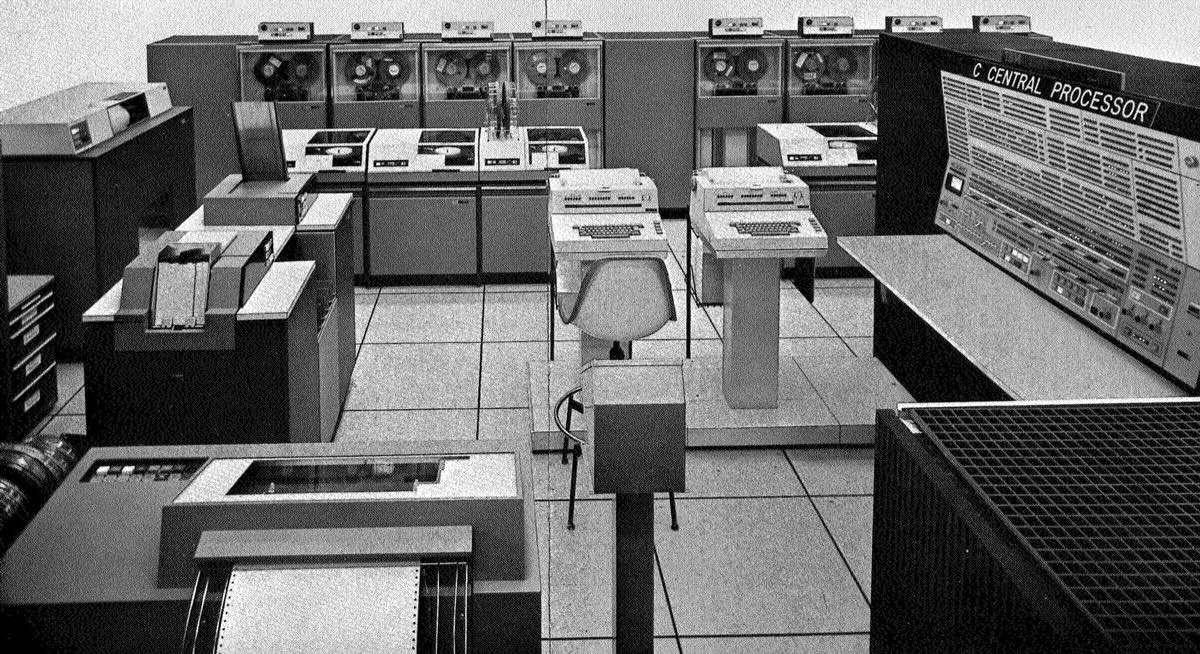
IBM 360 Computer Complex – NASA
So here I was – declared an “officer and a gentleman” by act of Congress – but in reality a complete newbie to the technology behind and inherent in this duty station – technology that was supposed to be my job to handle. I was confronted with and confounded by rooms filled with row upon row of devices with blinking lights clattering away 24/7; card punch machines interfaced by a QWERTY keypunch device used to literally punch out a program employing an early version of the basic programming language onto a card or series of cards, which were then scanned via a reader to produce paper tapes which in turn were loaded onto a reel to be processed via an IBM computer [similar to the one pictured here] – that took up an entire room by itself – for broadcast over a secure network to the world.
Officers Club Pool – Ft. Allen P.R. 1967
One circumstance I was completely capable of handling was to take advantage of the amenities offered a young single guy in the sub-tropics, like complementary room and meals at the BOQ, and the use of a nearby swimming pool where on my off-duty hours I could work on my saltwater tan at the taxpayers’ expense, take sips from my favorite beverage, and – completely riveted – page through Joseph Heller’s scintillating anti-war novel Catch 22.
Be that as it may, one of my most poignant memories of that time was spent standing a mid-watch – an all-nighter – observing activities in the Comcenter while its teletype machines were burping out page after page of text reports on the Detroit riots of 1967. My home town in flames. The following year I would witness the Chicago anti-war riots duing the 1968 Democatic Convention from a TV in the BOQ on Treasure Island. Our country in chaos – a redux which we seem to be heading towards once more.
Later that Summer I would participate in anti-war demonstration marches through Golden Gate Park – dressed in civvies of course. In 1970 these demonstrations would morph into mass protests fueled by the Nixon administration’s further escalation of the Vietnam war as well as the Kent State massacre that, having been broadcast globally over both radio and TV, would eventually spread nationwide, spark fears of a national insurrection, and close many college campuses for the remainder of that school term.
Student Protests 2024 – Reuters
Today we are witnessing a resurgence of that anti-war climate both worldwide as well as by GenZ college students nationwide in response to the Israeli attacks on Palestinians in Gaza, one important difference being that as of this publishing the Mass Media has literally been forbidden by its corporate owners to discuss the Palestinian side of the conflict either on air or via blogs for fear of airing or publishing anti-semitic rhetoric which could cast a critical shadow over Israel’s attempts to defend itself. While that may be relevant the truth is that such policies tend to restrict the frequency of free and open discussions about the war and its repercussions and do nothing to resolve the war itself. Plus my thoughts are that since by definition Palestinians and Israelis are both semitic peoples, this war itself is clearly anti-semitic. Besides, wars never solve anything, they just create more hate. And who’s to blame? Try dog spelled backwards who doesn’t seem to even give a howl. [DGMS].
MEDIA MANIA.
Mr Rainier From Red Square at U.W.
So, having been in communications in the Navy provided the inspiration to continue exploring communications opportunities in the mass media field once I became a civilian again. And upon “retiring” from the Navy I applied for and was accepted at the University of Washington’s Communicatons School located in the communications building, the top floor of which featured a series of teachers offices, media editing rooms, production studios, and the broadcast facilities of the university’s FM radio station whose call sign was KUOW.
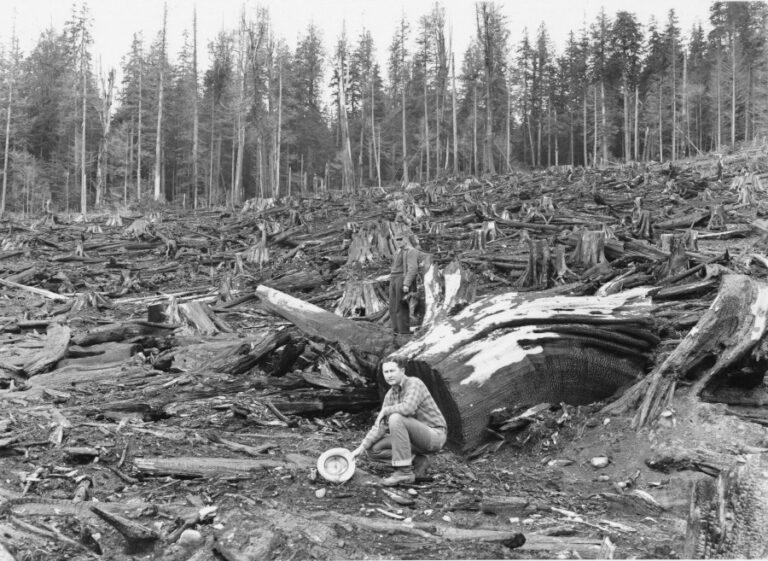
Forest Clearcutting – Quinault Indian Reservation 1970
For the next two years I would completely immerse myself into the media complex of the school, attending classes and lectures, participating in extra curricular projects like filming the environmental devastation resulting from the clearcutting of the nearby forest that was part of the Quinault Indian Reservation by Georgia-Pacific [both then and now a part of Koch Industries – you know the Koch Brothers]. The tribal council were then actively suing the Bureau of Indian Affairs – which had historically been tasked by law to oversee forest management policies and distribution on the reservation – for mis-management of the forest resources that the tribe depended upon for survival [the tribe eventually won the suit].. We shot the film [16mm] using cameras borrowed from the local PBS station KCTS -TV – then owned by the university – and cut the developed film negatives in one of the editing rooms in the basement of the Communications Building – my very first attempt to edit a film.
For another project, an instructor for a writing class I was taking had somehow gotten hold of an early prototype VCR that used three-inch reels of half-inch videotape that we used for class projects. Shooting was challenging since you had to literally strap on the bulky recorder and balance the camera with its long cable attached to a port on the side of the VCR to even take a shot. The real problem was technically editing the result which involved a dubbing process of starting and stopping both source and master machines in sync in order to produce a coherent result. Needless to say it was a learning experience in every sense of the term..
ET CALLING.
Sound editing was another media technical skill that one needed to master. Learning how to duck the music under a narration, add sound effects to a track, or master the art of the segue were key skills necessary for landing a job in both radio and TV or film. Timing is everything a paramour once chided me. 🙂 During one such class the instructor Irv Broughton , who also published his own literary quarterly and whom I would later join on a legendary cross country literary quest, began reminiscing about his favorite old time radio shows when he let me in on a little secret.
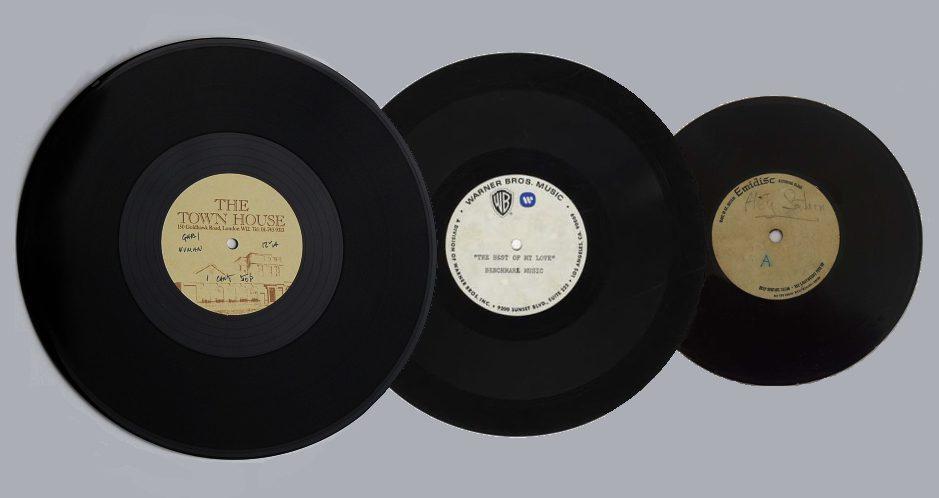
Electrical Transcription [ET] DiscsKUOW had an immense archive of radio shows dating back decades that had been originally broadcast over various radio networks in the Eastern time zones back in the day and that had been etched onto “acetate” discs by affiliate stations for re-broadcast in the Western time zones.
These discs called electrical transcriptions [ET] – often 12″ to 16″ in diameter – were actually made from aluminum with a coating of cellulose nitrate shellac, upon which radio broadcasts were etched and archived for future use. Staffers at KUOW had apparently found boxes of these discs stored in an old transmitter site that once belonged to a local radio network affiliate station.
Plus…KUOW was looking for volunteers to help transfer the contents of these discs to audio tape. Needles to say I wanted to be first in line, and later that very afternoon I was – anxiously seated in a chair in front of a turntable in the archive, it’s shelves filled with stacks of boxed discs, all neatly labelled by network and show. And on the table next to the turntable sat a box of 7″ reels of audio tape waiting to be loaded onto the reel to reel tape machine situated nearby. A quick glance at those shelves confirmed not only that I was surrounded by broadcast radio history, but also that I was in radio heaven.
Sooo..care to guess which show was one of the first that I transferred to tape? I’ll put a link to it below so you can have a listen at your leisure when convenient [it’s an hour long].
SNAP CHAT.
The lecture halls were on the ground floor of the Communications Building where a class of 50-100 students would meet several times a week for a talk given by a professor on topics to be covered for the specific class they were enrolled in. One particular lecture series that captured my attention was titled “Communications in Theory and Practice” given by a professor whose name escapes my cluttered mind some decades later. His talk that day covered the recent history of the mass media back then and its influence on popular culture – a presentation which initially began with an outro audio clip from a very popular old-time radio mystery show from back in the day, broadcast over the lecture hall’s P.A. system:
One important difference with these recitations was that unlike other such lectures, at its end the entire class would have to undergo a previously prepared snap quiz on the subject and content of the talk they’d just heard which – when added to others the class would experience throughout the course’s term – would determine one’s final grade for the class. That being said…. you had to stay focused for every class and take great notes [there were no Cliff’s Notes] … plus no checking out that blonde in the front row.
So, once his lecture ended, the instructor produced copies of the snap quiz from a nearby briefcase, gave them to the T.A. to hand out, and we had 20 minutes to complete the questions listed on its pages. These pop quizzes were always both challengingly thorough and humorously entertaining with some kind of twist somewhere in its layout and this one did not disappoint. There, located at the bottom of the last page was the final query of the quiz:
What bears Bitter Fruit and Who Knows?
TWO TIN CANS AND A WIRE.
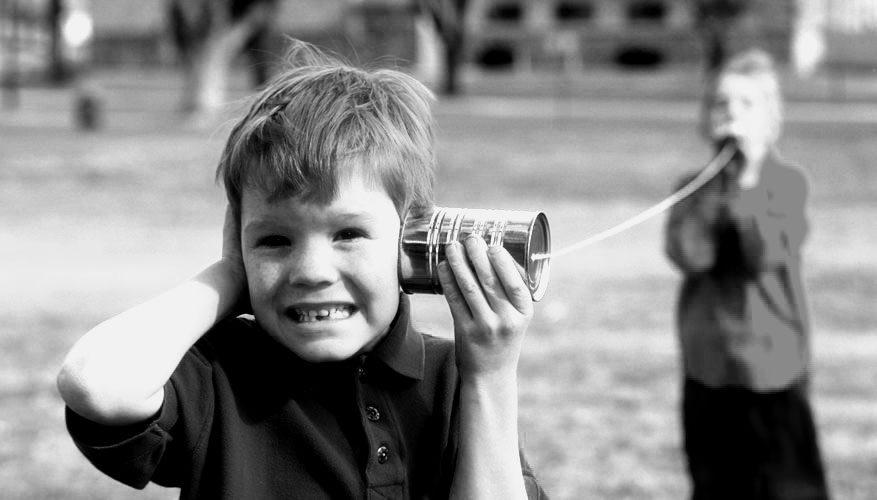
“Can You Hear Me?”
During another such talk given by the same professor, we were fortunate to participate in an extraordinary communications experiment – a rumor chain – AKA Grapevine Communications. The way this test “worked” was to place everone in the class in a seat directly behind the person in front of them – except for the front row of course – row by row – front row to top. Each person in the front row was given a pad of paper on the first page of which was typed a story consisting of a paragraph with several key bits of information.
We were given a minute [60 seconds] to read the message, then prompted to fold that page back over the top of the pad so as to completely cover the original message and secure the folded page with a rubber band, then hand-inscribe a synopsis of that message on the newly uncovered page, and subsequently when prompted to, pass the pad to the person behind us who would do the same – row by row – up the chain to the top.
When the final message on each pad was compared with its original, the two messages were always quite different, in some cases completely unrelated which – by design – clearly demonstrated the inherent long-term distortions we as informers/informants incorporate into the narratives we’ve heard then subsequently relate to others. We tend to filter such chronicles through our own learned anxieties, prejudices, experiences, and opinions, then often elect to focus not on the details actually contained in the message we are recounting but our opinions on what that message should contain. Our instructor called this process – selective perception –
a cognitive process where people selectively attend to certain aspects of their environment or particular stimuli while ignoring others.
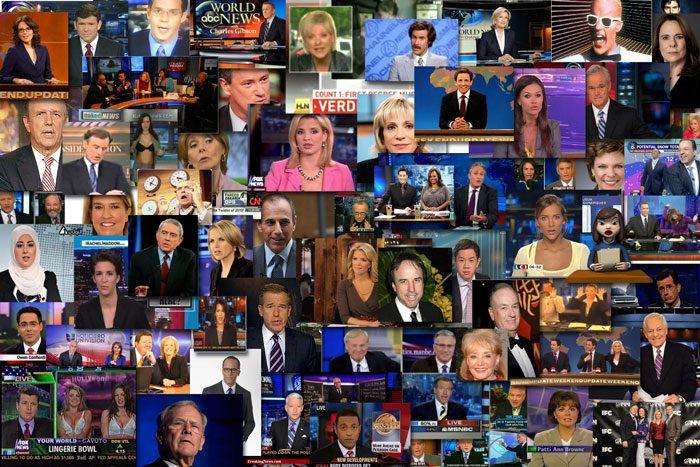
Talking Heads
And this discriminatory process exposes a predominant methodology deployed by the mass media – back then and continuing now – for controlling public awareness about socio-political and economic programs, practices, and issues including the process of either extolling or exposing the personalities associated with the issues being explored. Social media jumps right off the “page” – literally on our computer screens, where through the medium of electronic mobile devices, pundits openly express their constitutional right to freedom of speech but do so in ways that morph opinion into fact or make no distinction between the two. This is called “news” with a panel of talking heads gaslighting opposing views with claims of “fake news” and “alternative facts” coupled with the implied tautological assertion that “the truth is what I say it is”. [DGMS]
Need an example from the “real world”? Okay, for a classroom project exploring the subject of newsworthy reporting, I interviewed the News Director for one of the local Seattle network TV stations during which I queried him about the process of news gathering: who the people were that did the reporting; how were they assigned to stories; what were their tasks; how were these reporters evaluated; what kind of background did they need and basically what type of person gets hired. [He took one look at me dressed in an my old Navy officers coat with my long hair and beard and said pointedly: “You wouldn’t get hired”]. My final question was, who gets to choose what kind of story makes the news? He replied:
“The news is what I say it is”.
THE NEWS.
Eventually I did a live audition as the host for KUOW’s 4-7 PM weekday broadcast of the program All Things Considered from National Public Radio [NPR], the network’s then fledgling newscast which had premiered in May 1971 nationwide. Since KUOW was a charter member this was a big deal, especially for a student whose only previous live experience behind a radio mike was singing “Old MacDonald Had a Farm” more than two decades before.
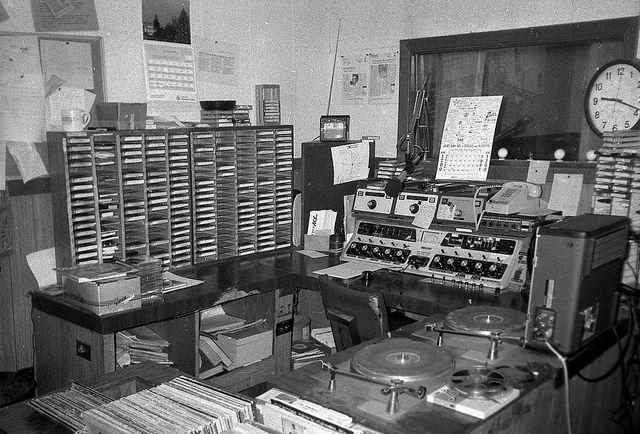
Typical Radio Broadcast Studio – 1970’s
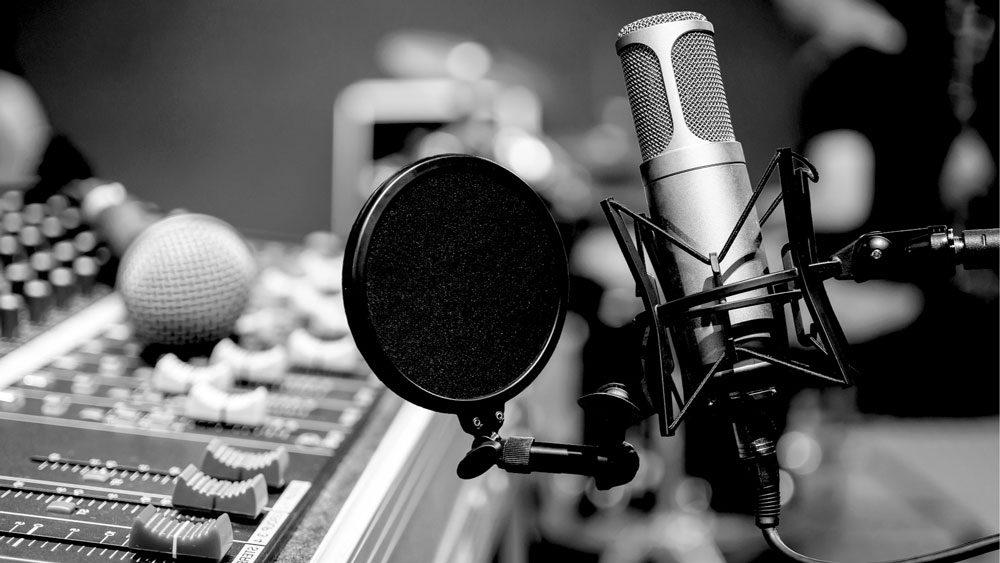
Plus there was a set of routines an announcer had to master in order to ensure un-interrupted on-the-air transitions and segues run from the control booth. You had to be a D.J. and be able to flawlessly cue LPs and audio tapes so that they started promptly when launched – no “dead air”. For the sixty second musical transitions between segments of the show provided by NPR, you had to be ready to “pot down” the music while “potting up” your voice intro that included the station’s ID plus a series of blurbs about the content of future programming to be aired – then close with a station ID outro and “pot down” your audio while bringing up the audio level of the background music. No “dead air”. BTW, “pot” stands for “potentiometer” – the volume dials or sliders on a typical control room dashboard like the one pictured here.
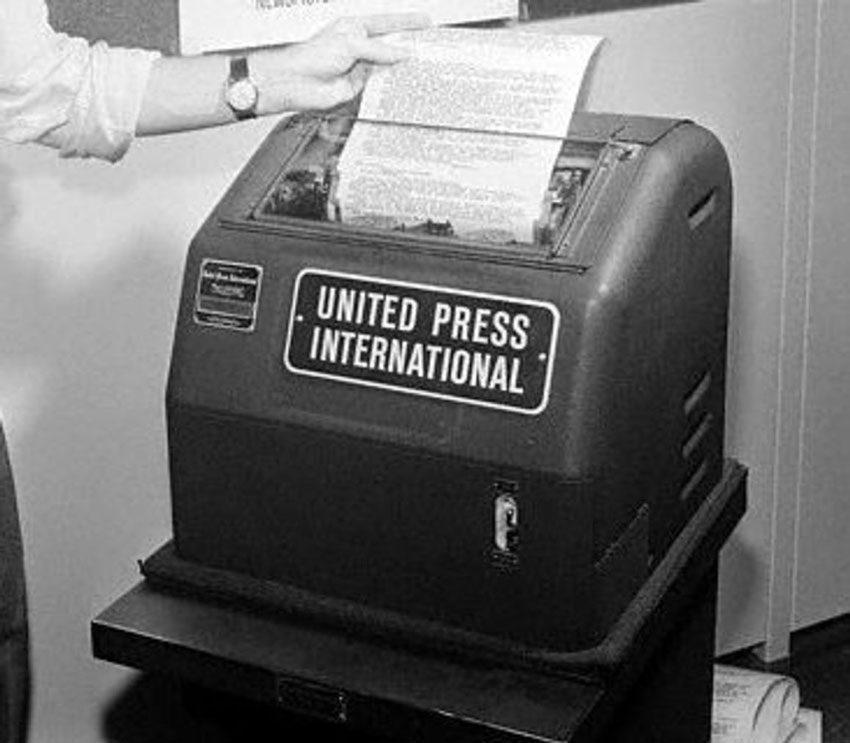
UPI Teletype
Then there was the five minute break in the All Things Considered broadcast for member stations to air local news which if memory serves happened at 5:55 PM each weekday that meant you had to access KUOW’s news cubicle – a glass enclosed space with a table in the middle and two teletype machines against a wall, one networked into the Associated Press [AP] newswire and the other to UPI [United Press International] – that would periodically burp out pages of text regarding the local weather and the “newsworthy events” of the day. Between control booth on-air tasks, you had to periodically dash over to the news cubicle, assemble text printouts from the teletype machines in some logical order for broadcast, then edit the text itself making sure you had enough to last the length of the news-break, and make sure to place the weather forecast at the very end because you always closed with the weather predictions because your audience expected it because – especially in Seattle – they needed to know if it was going to rain.
ALL THAT JAZZ.
KUOW’s programming was by and large wall to wall classical music and opera interspersed with news breaks and “live” or pre-recorded interview shows throughout the day. And once in a while I’d substitute for a host who was sick or needed some time off – especially on a Sunday – when after scrambling up several flights of stairs at or before 6 AM – I’d burst into the master control room, turn on the lights, and give the transmitter site a “rap on the horn” so they could power up the station’s transmitters. Then I’d proceed into my shift and follow the script so to say – spin the recordings that were listed; perform the news breaks and announce the day’s programming until relieved.
One such relief person was a young student who had a deep and resonant voice – basso profondo it’s called I believe -that was so sonorous I swear it sometimes caused the windows of the control room to vibrate. His name is Steve Reeder, who would go on to spend nearly a decade in Chicago teaching at the university level and broadcasting there from WFMT-FM then subsequently return to the Seattle area to work at KING-FM for decades I’m told.
Steve enjoyed a Friday evening time slot at KUOW that – if memory serves – ran from 8 PM to Midnight and he had some ideas about the kind of contemporary programming he’d like to air during his shifts. However the music library at the station was a bit scarce for genres other than the classics. Most radio stations build their music libraries over time from promotional discs they receive via music publishers whom are eager to get their performers and music heard by the public, so freebies meant free air time.
Consequently, this entailed completing several tasks that had to happen – soon. One was convincing the station manager to first alter KUOW’s classical programming ethos to include a few hours of contemporary performances on Friday nights and second to reach out to the popular music labels like Atlantic, Columbia, Warners, RCA, Capitol, etc. for promotional copies of their current releases. Another was to bring in copies from our own personal libraries to air. Fortunately Steve was very good at getting his ideas heard because within days he got the green light from the powers that be to begin airing his programming for the time slot and I would be along for the ride as his sidekick.
The “plan” initially was that Steve would begin the shift and air content of his own choosing: music tracks, interviews, live in-studio sessions, and pre-recorded events, then I would finish the shift with content of my own choosing that contained similar programming options which for me meant the primary focus would be on Jazz.
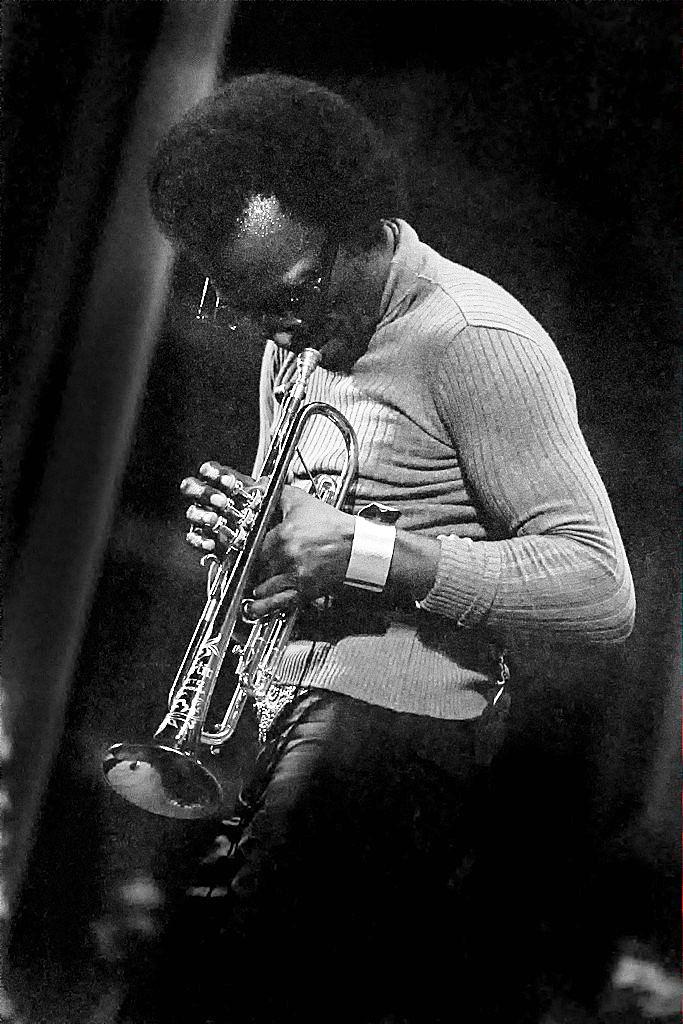
Miles Davis
Ever since I was a child, listening to recordings my parents had by Glenn Miller and Benny Goodman I was fascinated by the genre. This Jazz allure continued on into my college years when I started to sneak into after hours clubs in the Detroit area – there called “Blind Pigs” because the Pigs were on the “take” and turned a blind-eye to what was happening in them – which was Jazz and…well you know. I used to play the recordings of the great pianist Bill Evans at parties back then, even after my girl friend at the time called the music boring. Or maybe she meant I was boring. In any event, I suppose that was one reason why I took her to see John Coltrane at the Drome Lounge in the Detroit ghetto where he proceeded to blow the roof off of the place. Boring my ass.
Anyway, back in the early 1970’s the most popular genre in Jazz had been pioneered by the legendary Miles Davis. It was called “Fusion” or “Jazz Fusion” and as the term implies it was a blending of classic jazz rhythms and phrasings with rock and roll and the blues [sometimes also called “Funk”]. And Fusion’s most favored performers were Miles himself [his album “Miles In The Sky” remains arguably the first Fusion album of it’s genre ever recorded] plus artists either influenced by or former bandmates of Miles like: Herbie Hancock, Chic Corea [Return To Forever], Wayne Shorter & Josef Zawinul [Weather Report], Tony Williams [Lifetime], guitarist Larry Coryell, and the then rising star in the Fusion Galaxy guitarist John McLaughlin AKA “Mahavishnu”, leader of the Mahavishnu Orchestra. For my segment I briefly used McLaughlin’s recording of “Follow Your Heart” as its theme.
We worked “live”, manually mixing tracks together either by segueing the audio from one turntable perhaps playing “Rawalpindi Blues” from Carla Bley’s Escalator Over The Hill under another turntable spinning “Miles Runs The Voodoo Down” from Miles’ Bitches Brew album or by starting clean, one track outro to a succeeding track intro. But unlike the classical programming at KUOW, we had no plan – no prepared list to go by – at least I didn’t in the beginning. It was all improv. I had a friend who even loaned us several original 78rpm discs by Louis Armstrong and Jelly Roll Morton so we could tape them for a future airing. Steve and I would also set up the studio for live recordings, usually small groups, solo performances for voice and guitar or piano, and on one occasion a percussionist who soloed for 30 minutes. This meant fewer audio issues with mike placement and mixing for the resultant broadcast audio which we would also tape for the performers.
PLAYLISTS.
Every media event – be it a news show or a podcast or a Taylor Swift concert or a halftime extravaganza at the Super Bowl – has a script; a schedule for what happens when and who is involved. Radio audio is no different. From the advent of ETs to audio tape to digital recordings – the content for those old-time radio shows, newscasts, historical events, live performances, and interviews was pre-recorded for broadcast at a future time. Why not music?
Toward the end of April 1972 I was approached by KUOW’s station manager who introduced me to four UW journalism students whom had been gathering support, equipment, and funding to start a non-commercial radio station whose call sign would be KCMU-FM that was to be completely student managed, operated and staffed, which would be initially housed in spare studio spaces on the third floor of the communications building adjacent to those occupied by KUOW. They desperately needed experienced staff to run the show and wanted to know if I’d be interested. I immediately agreed but cautioned them that I was due to graduate in June so my commitment would have to be short term.
Speak Into The Mikes
So in mid-May the station started broadcasting via its 10 watt transmitter. I would come in to the studio for my shift, turn on the power, read some news briefs I’d assembled, talk about station programming and what was happening on campus, and play some jazz for an hour or so. Soon I realized that it would be a more efficient use of my time if I pre-recorded my shows and made some others as backups for the staff to air once I had departed – my first attempts at creating playlists. The trick was to record them in a way that focused solely on the music content: spin the tracks in a multiple series – 3 to 4 one after the other – announce their credits – spin the next series of tracks and do the same over and over for an hour or more.
KCRW Morning Becomes Eclectic promo
Little did we know at the time, but playlists would become the program format du jour especially for streaming music-related content going forward. Initially, as with Steve and I, it would be via live programming sessions, much the same as that originated by KCRW-FM in Santa Monica on its seminal “Morning Becomes Eclectic” program that would wind up being webcast along with other KCRW series literally all over Southern California and beyond. The program is a three-hour adult album alternative music program first airing in 1977, broadcast live every weekday and is one of the first and certainly most influential music playlist programs to grace the airwaves. The show is repeated twice daily on KCRW’s music webcast, and live performances are also sometimes available.
RADIO DRAMA.
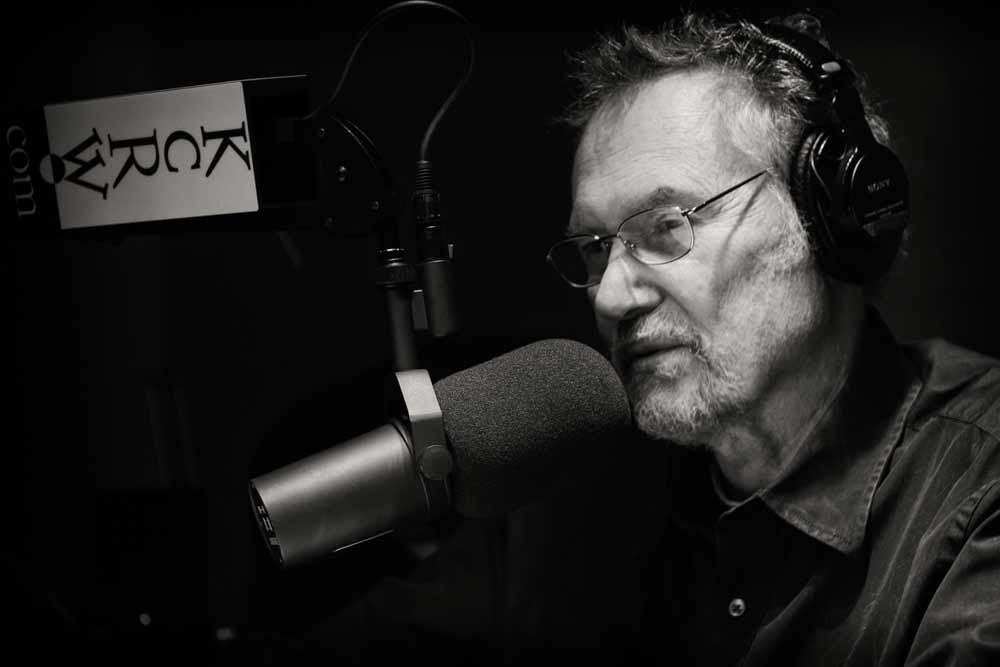
Of the programs aired over KCRW, one of my favorites were those that featured the raspy sonorous baritone of Joe Frank weaving his fantastical dark monologues recorded over loops of percussive beats and drones. Here is what Francis Ford Coppola says about listening to one of his absurdist recitations:
I came upon Joe Frank’s work by accident a number of years ago while driving to my home in the Napa Valley late at night. I couldn’t believe the originality and sheer brilliance of what I was hearing.
Joe Frank at KCRW-FM
You do really have to listen to his shows at night – preferably alone – maybe driving in your car along a two lane blacktop “blue highway” as author William Least Heat Moon called them, in order to have some sense of the hypnotic power of Joe Frank’s surrealist … enchantments I would call them because I didn’t want them to end. I was hooked. Don’t believe me? Then check out the link provided below to one of his shows – all of which are also available on his website.
Here’s a clip from The River – an episode from his “Somewhere Out There” series:
Joe Frank’s radio career began at WBAI in New York where he became one of the co-hosts of All Things Considered. In 1986 Joe relocated to Santa Monica to begin work at KCRW, hosting and performing in several diverse series of radio programs starting with, “Joe Frank: Work in Progress”. In 1991 he won a Peabody Award for that series.
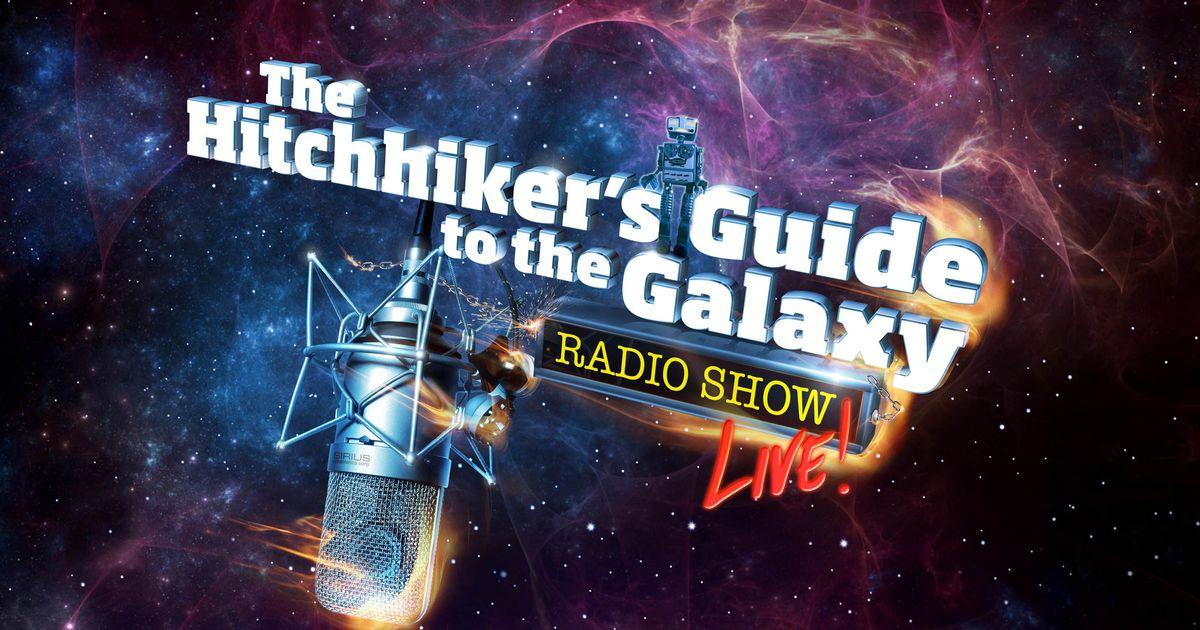
And if that’s not enough to whet your whistle, an avid listener would also be given the answer to the Ultimate Question of Life, the Universe, and Everything which is:
Maybe that was why the show was the only radio show ever to be nominated for the Hugo science fiction awards.
OUTRO.
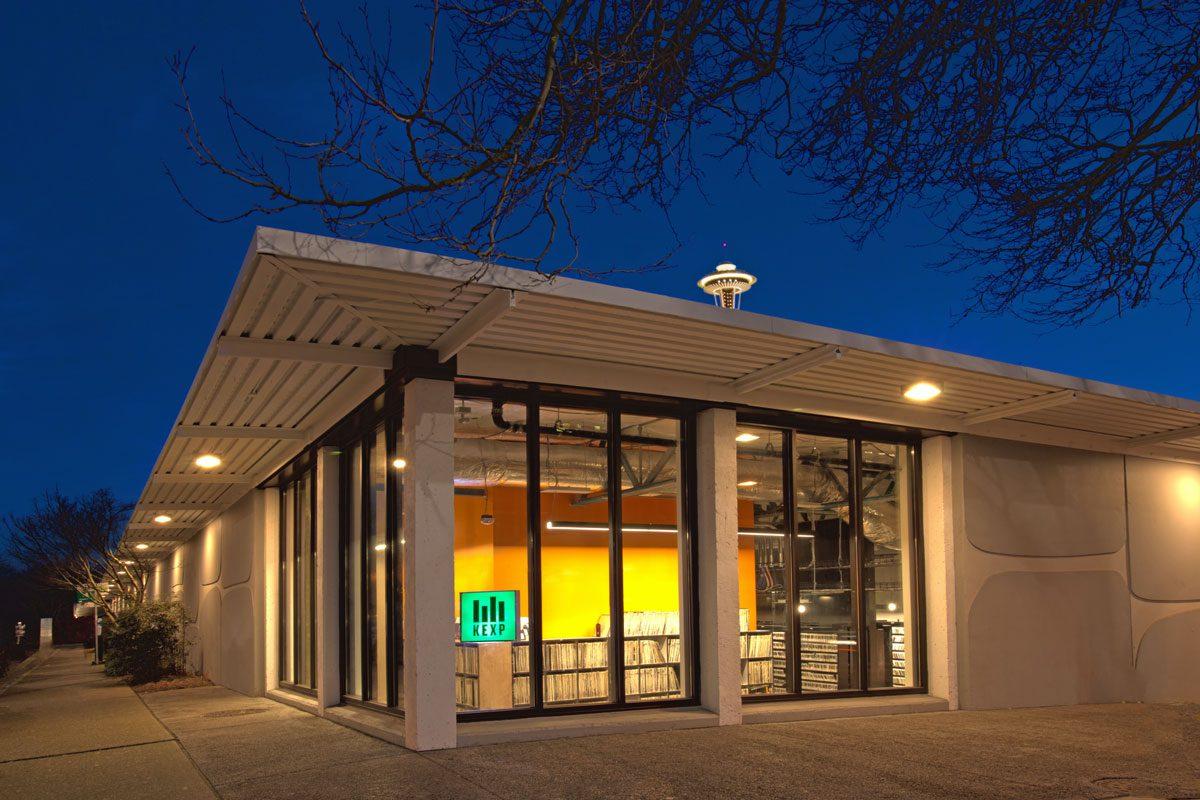
KEXP-FM Studios – Seattle
A recent article in the SF Chronicle by Aidin Vaziri caught my eye regarding plans for a Seattle-based nonprofit radio station with the call sign KEXP to begin broadcasting in the Bay Area after having purchased the signal frequency 92.5 FM for $3.75 million that had been formerly assigned to station KREV that had gone bankrupt in 2023.
My initial reaction was how does that happen? How does a non-profit radio station come up with the jack for the $3.75 million to score such a deal, especially in a market that supposedly has been shedding jobs and venues for the past several years post-pandemic? This was answered via Vaziri’s interview with the station representatives including CEO Ethan Raup during which it was revealed that funding for the acquisition of the 92.5 FM frequency came from a $10 million endowment left to KEXP from a listener in 2017. Plus the station itself has an annual operating budget of $15 million and “sources the remaining funds from grants, corporate underwriting, and other sources”.
KEXP also has an audience of “nearly 200,000 weekly listeners on the airwaves with an additional 100,000 online listeners. KEXP’s YouTube channel meanwhile has 3.2 million subscribers and nearly 1.7 billion views.”
Hmmm. Nuff said.
The past incarnations of stations broadcasting with the frequency 92.5 FM included one of my faves – KJAZ which was an all jazz radio station located in Alameda, CA founded in 1959 and one which I was a devoted listener to as a San Francisco resident during my tenure in the Navy there from mid 1968 to mid 1970. Today it is simulcasting KEXP’s broadcasts with the call sign KEXC.
Also included in the supporting paragraphs of Vaziri’s article was a brief mention of the origins of KEXP itself. Originally founded in 1972, it was created and operated by a number of University of Washington students utilizing borrowed equipment which included a 10 watt transmitter – barely powerful enough to transmit a signal as far as 15th Ave a few blocks away.
What is not revealed in the article was that the station initially used spare radio broadcasting facilities located on the third floor of the university’s Communication Building which were adjacent to the University of Washington’s exisitng pubic radio station KUOW. Plus since the university’s designation of the Communications Buiding was CMU [for communications], the fledgling station’s call sign was KCMU which it broadcast under for nearly 30 years.
By 1982 the station had become listener-supported and was becoming a center for a new music genre which would become known as *grunge*. In 2000, KCMU moved out of the communications building to “new digs” in Kane Hall and according to the WiKi: “started streaming high-quality, 128-kilobit-per-second MP3 compressed audio over the internet, becoming the first station in the world to offer online audio of this quality.” In 2001 the station became KEXP funded largely through grants from Paul Allen’s Experience Music Project [EMP].
But what none of these sources revealed was that a year later – according to an email I received from sources at KEXP announcing the station’s 30th anniversary in May 2002 that – much to my surprise – KCMU was the first student-run FM station in the country and I was fortunate enough to be one of those founding student staff members.
Cowabunga!
THE MARKETPLACE.
Podcasting
I was watching an interview on the local PBS station conducted by Jeffrey Brown on the growing popularity of Podcasts. It is estimated that this audio format has grown into a $25 billion industry with nearly half a billion listeners annually among which Spotify claims as its top-performing podcast from Joe Rogan which has over 14 million subscribers. And suddenly Big corporate money saw a commercial opportunity involving the control and packaging of a new art form – much the same as they’d already done with print media, film, and TV.
But things subsequently have changed and very quickly. These large media conglomerates soon realized that they weren’t getting their return on investment [ROI] and what followed within a year were massive layoffs in the media and tech industries – as well as in the podcasting field. One of the reasons for this reaction by corporate media is the lack of control over the content- i.e. copyright control for how those podcasts as intellectual property [IP] are aired and paid for. Yes, you do have Spotify and its network outlets – SiriusXM and its network – Audacity Inc. – as well as others – but there is a broad spectrum of social media platforms that potential audiences browse for content to share, including YouTube, Vimeo, Meta, X, WhatsAp, Pinterest, Instagram, and others. And these social media subscribers get that content for free.
As reported by Sam Becker of Fast Company, the Mass Market Media industry [MMM], including print media, has also been shedding both outlets and jobs over the past few years.
“And for 2023 as a whole, more than 21,400 media jobs were lost, the highest (excluding 2020) since 2009, when more than 22,300 jobs were cut.”
According to Gabriel Kahn, professor of professional practice of journalism at the USC Annenberg School for Communication and Journalism, and a former newspaper correspondent and editor:
“In a way, what we’re seeing is a cluster of headlines that are the consequence of a problem that’s been happening for ages. Overall, the media is grappling with—and has been grappling with for decades now—finding a sustainable business model, and clawing money back from Big Tech firms that not only hoovered up advertising dollars but also trained generations of people to expect content for free.
“It’s an industry that was built off of two major revenue streams: advertising and subscriptions. For more than 20 years now, Big Tech [Social Media, Search Engines, Media Sharing Platforms] has drafted a blueprint of the business plan for the news media, and that’s never worked out for the news media.”
What we hear and see now on public media stations [NPR and PBS] are large blocks of time – up to a fortnight – spent several times year for fund-raising in order to pay for the privately-produced programming aired via their frequency channels; programming owned by a handful of multi-national conglomerate entities whose primary minions control the fiscal playgrounds of financialized capitalism, meaning public audiences won’t see or hear content that is either critical of or contrary to the libertarian views and policies of the plutocracy, plus the fees collected from subscribers and the stations themselves for this programming tend to be passed on to the stakeholders as dividends instead of being used to help sustain the industry itself, much like what has historically been happening on Main Street vs Wall Street for the past decades thanks largely to the Quantitative Easing [QE] policies of the FED which have hyper-inflated asset prices across the board that in turn have “trickled-down” to become the primary cause of the current inflationary trends in the real economy. So much for public media – but DGMS.
As detailed in an article titled “The Life and Death Of Hollywood” published via Harper’s Magazine, Daniel Bessener, contributing editor at Jacobin states:
“The new effective bosses of the industry—colossal conglomerates, asset- management companies, and private-equity firms— had not been simply pushing workers too hard and grabbing more than their fair share of the profits. They had been stripping value from the production system like copper pipes from a house—threatening the sustainability of the studios themselves.
“According to research by Bloomberg, in 2013 the largest companies in film and television were more than $20 billion in the black; by 2022, that number had fallen by roughly half. From 2021 to 2022, revenue growth for the industry dropped by almost 50 percent.
“The industry as a whole is now facing a broad contraction. Between August 2022 and the end of last year, employment fell by 26 percent—more than one job gone in every four.
As A.J. Liebling said, “Freedom of the press is limited to those who own one.”
THE ADVENT OF AI.
And the arrival of increasingly prevalent generative AI machine learning and deep learning content creation doesn’t bode well for the job market going forward as well. According to a recent post on Futurism:
“For years, any American kid eying a stable, future-proof job was told to “learn to code. Now in 2025, anyone who followed that advice faces a painful reckoning: a decade of booming computer science enrollments has created a massive pile-up of graduates entering an abysmal job market.
“Tech companies are planning to lay off 141,159 jobs this year so far, per the report, up from 120,470 over the same period in 2024.”
ChatGPT
Plus the use of chatbots like ChatGPT does not augur well for media sourcing control for content providers either. These generative machine learning AI algorithms will be programmed and deployed going forward by Big Tech as well resulting in the same or similar copyright issues that have plagued Mass Media content providers in the past. A case in point is the advent of Podbean AI, positioning itself as “the ultimate solution for AI-driven editing, generation, and optimization” featuring “Cutting-Edge AI Audio Optimization and Content Generator”.
What is the old catchphrase – especially as applied to those so-called Tech Giants?
“Steal from one it’s called plagiarism. Steal from many it’s called research“.
As promised here are links to a couple of episodes from Radio’s storied past: The Mercury Radio Theater of The Air production of The War of The Worlds plus Joe Frank‘s blending of the absurd with reality titled Just Get Me Out Of Here. Enjoy!
And seriously do support the local programming from your public media stations, plus national news series like All Things Considered and music webcasts like Morning Becomes Eclectic.
Plus if you’d like to listen to some of our recent Playlists or view some of our historic or contemporary video performances just click the appropriate link. Just remember:
We aree time travelers – one and all. Each step we take in the Present marks a transition from the PAST into the FUTURE. The only constant is change. And as mere mortals we are all renters.
I’ve recently been viewing a series of posts on social media documenting the ongoing terror and tragedy currently raging in Ukraine, uploaded from various sources [see below] including those shared by our tour guide, translator, and close family friend Diana Borysenko, whose efforts on our behalf these past several years are the primary reason these blogs and videos about The Old Country even exist – not to mention all of the members of our extended family we’ve met and the friends that we’ve made there because of her talents – Ukrainians all – whose lives are at risk as we speak.Read more
In 2014 we spent a week’s stay in the Yucatan Peninsula along what corporate hospitality markets as the “Mayan Riviera”. Once past the glittering opulence of the seemingly endless row of resort developments along the Caribbean beaches of the state of Quintara Roo, one sees the reality of how the indigenous Mayan people live in the selva, under thatched roofs of woven palm fronds covering small one room makeshift cinder block hovels. Many work in the area’s only real industry, tourism; existing on incomes of less than $5 a day.
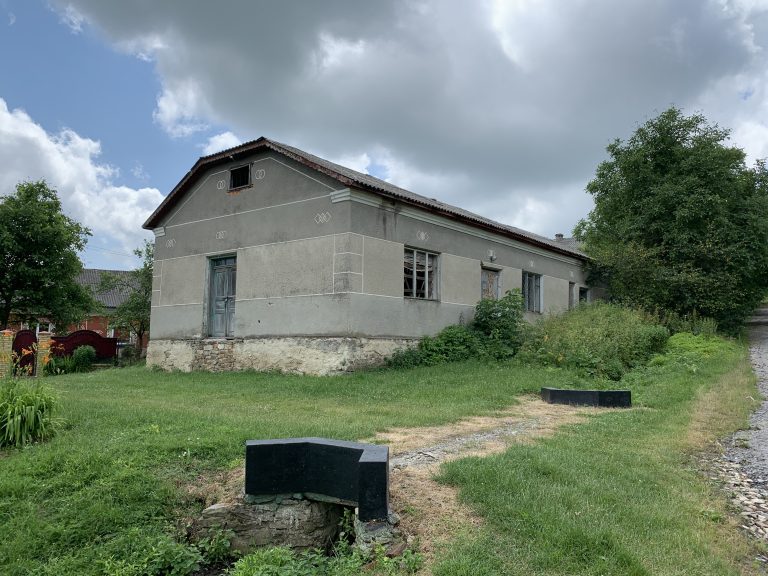
Former Business Offices Of Prokop Babiy, Burkaniv.
INFINITE DREAMS.
“How can you be in two places at once when you’re not anywhere at all”?
—The Firesign Theatre..
Isn’t that what “Dreaming” is – being cognitively in separate spaces at the same Time – “Anywhere” and “Nowhere” at once? Life then, like the song lyric, may indeed be a Dream, infinitely intertwined along a continuum of separate realities. How many of us right now at this instant are alive on this planet; eight billions? Life then – literally “Between The Forceps and the Stone” – might be a projection of eight billion multiple realities radiating from eight billion human bi-locating sources; finite creatures interlinked via rhizomatic networks along finite timespans, dreaming versions of the ultimate non-sequitur: Immortality. Read more
Two Thousand Eighteen was a year filled with both joy and sorrow; buoyed by success yet scarred by tragedy; suffused with hope but plagued by pessimism; our Future obfuscated by humanity’s obsession with personal gain often at the potential risk of species Omnicide. We have become the personification of an Ouroboros…obsessed with the Past, its lessons ignored, trapped by our own hubris in a repetitive cycle of self-annihilation.Read more
Morality & The Forever War: Chapter Five of The Forever War Chronicles
The above image gleaned from a link on Facebook provided by Young Americans For Liberty provoked a spirited exchange between myself and my long-time colleague and frequent foil for political, social, and cultural discourse, Robert Estrada whom I originally met and befriended on my daily ferry commute to Tiburon where I was then indentured to the 1% for a decade and a half. The ideas and thoughts we shared during those brief excursions soon became the high point of my day – but then again I always regarded myself as a morning person plus, if truth be told the work I was doing was not that exciting anyway. Read more
I recently received an email response from niece Erin Osgood regarding an earlier message I had sent her announcing my upcoming visit to The Strait. In it she expressed her regrets that she and her family planned to be out of town taking their annual vacation to Maine on the same weekend I would be arriving in The Strait.
Maine. The last time I was “out East” in Maine was nearly five decades ago, in the Summer of 1972. Read more
A recent AP post decries the evidence culled from interviews with local soldiers, residents, officials and western diplomats, of a resurgence of al Qaeda activity in Southern Libya hysterically claiming local authoritites are “fighting a losing battle to stem the flow of armed militants with suspected links to al Qaeda who use (the area) as a freeway across Northern Africa”. The report further states that these insurgents are “restocking weapons and mining disaffected minorities for new recruits as it prepares to relaunch attacks” as a part of an historical pattern of retreating to remote areas to regroup.